Digital Frontier: How FinTech and Regulatory Innovation are Driving Financial Inclusion and Diaspora Investment in Ghana
Ghana’s financial sector has undergone a remarkable transformation over the past two decades, evolving from a predominantly traditional banking system into one of Africa’s most dynamic digital financial ecosystems. At the heart of this transformation lies a deliberate alignment of technological innovation with progressive regulation, an approach that has not only deepened financial inclusion but is also positioning Ghana as an attractive destination for diaspora investment and cross-border digital finance.
Download Free Copy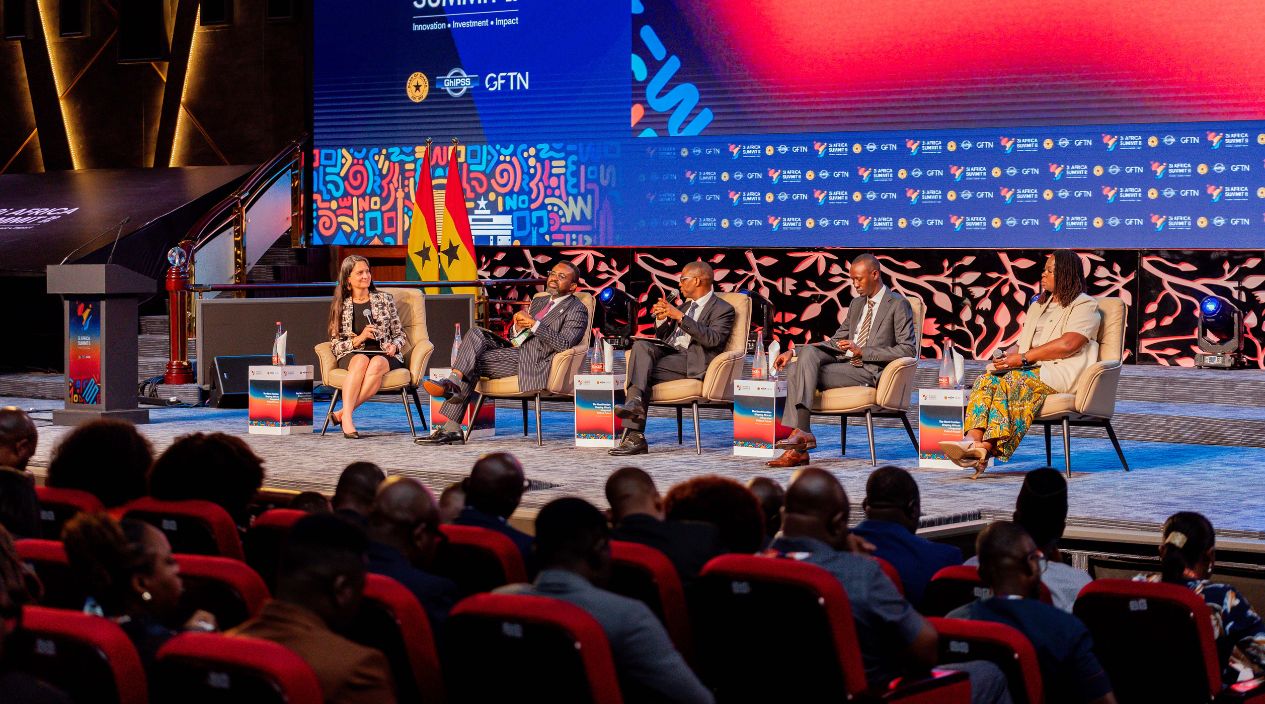
The story of Ghana’s financial evolution is, fundamentally, a story of visionary regulation and adaptive innovation. From the enactment of the Payment Systems Act, 2003 (Act 662) to the rise of mobile money, FinTech platforms, and virtual assets, the Bank of Ghana (BoG) has consistently demonstrated a forward-thinking regulatory posture. This has enabled the country to balance innovation with stability, creating a more enabling environment for financial sector growth.
A Foundation of Innovation: The Evolution of FinTech in Ghana
Ghana’s journey into digital finance began with the modernisation of its payment systems. Act 662 laid the foundation for electronic payment infrastructure, enabling the rollout of the Real Time Gross Settlement (RTGS) system and automated clearing mechanisms. These innovations enhanced efficiency, reduced settlement risks, and introduced speed into financial transactions.
A major inflexion point came in 2008 with the issuance of the Branchless Banking Guidelines, which allowed banks to partner with telecommunications companies to deliver financial services via mobile platforms. This partnership marked the birth of mobile money services in Ghana and initiated a shift towards digital financial inclusion.
Another breakthrough came in 2015 when the Electronic Money Issuers and Agent Guidelines allowed mobile network operators (MNOs) to function as Dedicated Electronic Money Issuers and formalised the relationship between them and the mobile money agents. This change incentivised the MNOs to expand their agent networks. This made it easier for people to access and use mobile money, leading to rapid growth and making it a key tool in expanding financial inclusion in Ghana.
The Payment Systems and Services Act, 2019 (Act 987), further consolidated this progress by introducing a tiered licensing regime that accommodates banks, fintechs, and payment service providers. This inclusive framework has encouraged competition, collaboration, and innovation, enabling the delivery of customer-centric financial products.
Today, Ghana’s FinTech ecosystem spans digital payments, lending, savings, insurance, pensions, and investment platforms, all supported by a robust regulatory architecture which provides clear mandates for the different categories of players in the ecosystem.
Driving Financial Inclusion at Scale
Ghana’s National Financial Inclusion and Development Strategy (NFIDS), alongside the National Payment Systems Strategy (2019–2024), recently updated for the 2025–2029 period, has served as a critical driver in expanding access to financial services and has recognised the pivotal role of Fintechs in achieving these strategic objectives.
The impact of FinTech on financial inclusion in Ghana has been profound. Mobile money services have bridged the gap between the banked and unbanked, enabling millions of Ghanaians, particularly those in rural and underserved communities, to access financial services through their mobile phones.
The 2021 Demand‑Side Survey (DSS) by the Ministry of Finance, revealed that Ghana surpassed the NFIDS target of 85%, achieving 96% financial inclusion of the adult population in terms of access to financial products and services. In 2025, with over 25 million active mobile money accounts and transaction volumes running into hundreds of billions of Ghana cedis, digital finance is not just an alternative but mainstream.
Interoperability across mobile money platforms and banks, which was achieved in 2018, has further enhanced accessibility, allowing seamless transfers and payments across networks. This interoperability has also created the digital footprint -– particularly transaction and behavioural data – necessary to unlock credit for individuals and small businesses, particularly micro, small, and medium-sized enterprises (MSMEs).
For MSMEs, which constitute over 90% of businesses in Ghana, FinTech solutions have become indispensable. Digital lending platforms, data-driven credit scoring, and mobile payment systems have reduced barriers to finance, thereby enabling entrepreneurship to flourish.
Unlocking Diaspora Investment Through Digital Finance
Beyond domestic financial inclusion, Ghana’s FinTech revolution is also reshaping its engagement with the diaspora. Remittances remain a critical component of Ghana’s economy, and digital platforms are making cross-border transactions faster, cheaper, and more transparent.
Innovations such as pre-funded remittance corridors and digital foreign exchange (FX) marketplaces are eliminating traditional inefficiencies. The regulatory sandbox introduced by the BoG has been instrumental in testing such solutions, including cross-border payment platforms linking Ghana with countries like Nigeria, the UK, and the US. The Bank has also piloted a Central Bank Digital Currency (CBCD), the eCedi, as part of its digital transformation agenda. The pilot eCedi was built on a secure, token-based system with both online and offline functionality. The results of the pilot and use-case analysis revealed that the CBDC can lower transaction costs and improve transparency.
Additionally, BoG is working to make remittances a stronger source of investment and FX. With the “Remit2Invest” initiative, the Bank aims to redirect the diaspora’s focus to remitting funds for investments instead of everyday spending, to support long-term growth. The plan encourages government agencies to work together so remittances can be used as steady funding for key sectors. Reforms are also being introduced to improve transparency in the FX market, strengthen payment systems, and update regulations, while a National Remittance Strategy is being developed to better use funds from the diaspora.
By integrating digital identity systems, mobile wallets, and interoperable payment platforms, Ghana is building an ecosystem where diaspora investors can seamlessly channel funds into local enterprises, real estate, and government-backed initiatives.
Regulation as an Enabler, not a Barrier
A defining feature of Ghana’s success has been its regulatory philosophy. Rather than stifling innovation, the BoG has embraced a “test-and-learn” approach, exemplified by its regulatory sandbox and proportionate, risk-based supervision.
This approach has also been extended to emerging sectors such as virtual assets. With draft guidelines issued in 2024 and the Virtual Asset Service Providers (VASP) Act (Act 1154) passed in 2025, the country is laying the foundation for a regulated digital asset ecosystem that can attract responsible innovation while protecting consumers.
At the same time, the central bank has prioritised cybersecurity and consumer protection. Initiatives such as the 2026 review of the Cyber and Information Security Directive, the expansion of the scope of the Financial Industry Command Security Operations Centre (FICSOC), and consumer recourse frameworks are enhancing trust in digital financial services.
Addressing Risks in a Digital Ecosystem
Despite significant progress, challenges remain. Cybercrime, data privacy concerns, digital illiteracy, and the proliferation of unauthorised digital lending platforms continue to pose risks to the sustainability of FinTech growth. Fraud schemes such as phishing, smishing, and vishing continue to target unsuspecting users, particularly those new to digital finance.
In response, the BoG has adopted a comprehensive strategy built on public education, regulatory enforcement, and real-time monitoring of threats. Ongoing collaborative efforts with law enforcement agencies have led to decisive actions against illegal operators, reinforcing confidence and trust in the financial system.
The Role of RegTech and SupTech in Sustaining Growth
As the Ghanaian ecosystem expands, regulatory and supervisory technologies (RegTech and SupTech) are becoming indispensable. Financial institutions are leveraging artificial intelligence, machine learning, and biometric verification to enhance compliance, improve risk management, and streamline customer onboarding.
Simultaneously, the BOG has deployed SupTech tools such as the Online Regulatory and Analytical Surveillance System (ORASS) and an internally developed Supervisory Intelligence Platform to collect granular data and make informed policy decisions.
These technologies are not only improving efficiency but also ensuring that innovation does not come at the expense of stability.
3i Africa Summit 2026
A further testament to BoG’s commitment to financial inclusion, innovation and investment is its 3i Africa Summit, which has run for three consecutive years. At the 2026 Summit, organised in collaboration with the Ghana Interbank Payment and Settlement Systems and Global Finance and Technology Network in Accra, discussions focused on shaping Africa’s integrated FinTech future. Overall, the discussions reflected a shared commitment to building a more connected, innovative financial system that can position Africa strongly in the global digital economy. The Vice President of the Republic of Ghana, Prof Jane Naana Opoku-Agyemang, announced plans to pilot a continental digital trade corridor to make cross-border transactions smoother, improve interoperability, and lower transaction costs across Africa.
A Digital Future Anchored in Inclusion and Investment
Ghana’s FinTech journey is a testament to the power of strategic regulation and innovation working in tandem. By fostering an inclusive digital financial ecosystem, the country has empowered millions, strengthened its economic resilience, and created new pathways for diaspora engagement.
As Ghana advances toward a cash-lite, digitally-integrated economy, its FinTech ecosystem is set to play an even greater role, not just in financial inclusion, but in attracting investment, driving entrepreneurship, and positioning the country as a leading digital finance hub in Africa.
For investors, policymakers, and innovators alike, Ghana’s digital frontier offers a compelling narrative: one where technology, regulation, and opportunity converge to shape the future of finance.